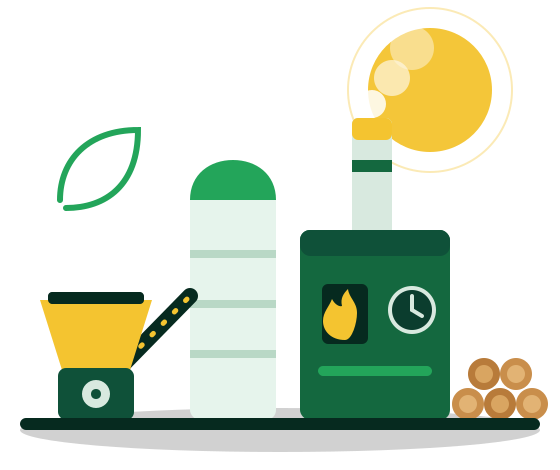
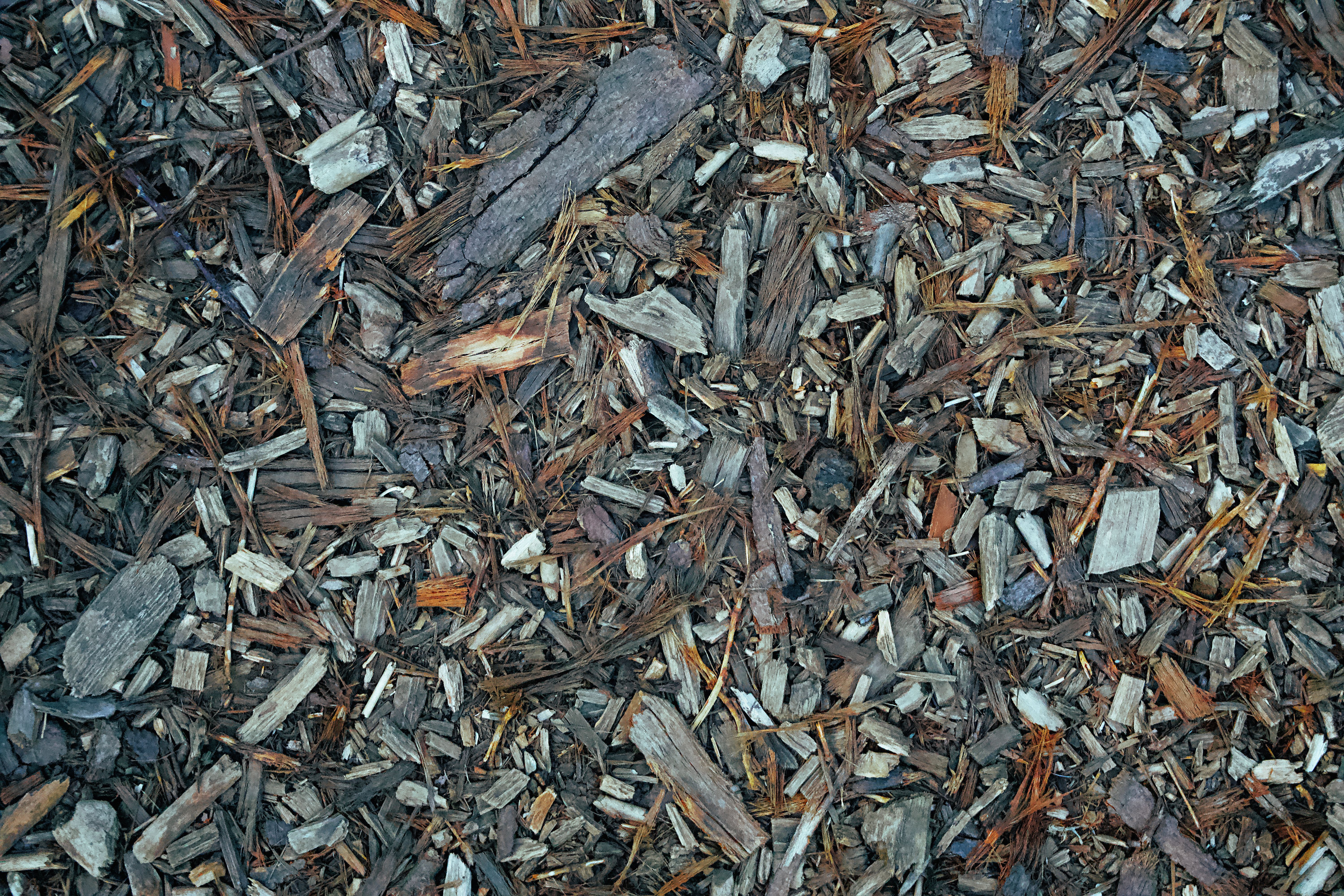
Any site that handles wood ends up with leftovers: broken pallets, crate lumber, offcuts, sawdust, brush, land-clearing debris. Most owners treat that pile as a disposal bill. A few treat it as fuel, and some of those run it through a boiler that heats the building, dries product and sometimes makes electricity.
Which group you land in depends on a short list of decisions, and the order you make them in matters. This guide follows the material from the yard to the generator so you can see where your own operation sits.
The chain at a glance
Each stage feeds the next:
- Collect and sort the material so the fuel stream stays clean.
- Reduce its size with a grinder, shredder or chipper.
- Store it and move it to the boiler without it getting wet or jamming.
- Burn it in a biomass boiler to make hot water or steam.
- Recover heat that would otherwise go up the stack.
- Add a generator, if you have a use for the electricity.
Nobody has to do all six. Plenty of sites stop after the grinder and simply haul less. Others stop at the boiler and buy less oil or gas. Work out what each stage gives you before deciding how far to go.
Know what you are starting with
Before you talk to any supplier, write down what you have. The questions that matter most:
- What is the material? Clean pallet wood, sawdust, bark, brush and mixed demolition debris all behave differently.
- How much arrives per day or week, and does the volume hold steady or come in seasonal waves?
- What is mixed in? Nails, strapping, plastic wrap, paint, treated lumber and soil all hurt grinders and boilers.
- How wet is it? Freshly cut wood can be about half water by weight, and the boiler has to evaporate that water before it gets any useful heat.
A page of answers saves a lot of back and forth. It also keeps the conversation about your material instead of about whichever machine a salesperson happens to stock.
Size reduction with grinders and shredders
Bulky wood waste takes up room, will not travel on a conveyor and burns unevenly. A grinder, shredder or chipper gives you a consistent product that you can store, move and sell.
Consistency is the real payoff. Feed systems and boilers are built around a particular size range. Long pieces jam augers and bridge across hoppers. Very fine material packs down or burns off too fast. When the grinder's output is predictable, everything after it gets easier.
The right machine depends on what you feed it and what you want back. Pallets and crates need different handling than brush or mill trim. Throughput should reflect the tons or cubic yards you actually process, not the biggest number on the brochure. Fuel usually wants a finer, even cut, while bulk handling can live with something coarser. If metal might get in, the machine and the process around it should be built with that in mind.
Plastics and mixed streams headed for recycling usually start with size reduction as well. Our waste reduction grinders page covers the options.
Ground wood has more than one outlet. It can go to a boiler, become mulch or animal bedding, or feed other processes. Some sites sell part of the output and burn the rest, which turns a disposal cost into a small line of income.
Storage and fuel handling
People skimp on this stage, and it shows. Fuel stored badly gets wet, rots or freezes into a block. A feed system that cannot move it reliably stops the boiler on the coldest morning of the year.
You want covered, dry storage sized for a sensible number of days or weeks. You want a feed path, whether conveyor, auger or walking floor, matched to the size of the fuel. Stones and metal need a way to be caught before they reach the boiler. And the layout has to account for dust, fire risk and a truck's turning circle.
Wet fuel is the most common headache. Sometimes you can dry it by storing it under cover with airflow, or with recovered heat from the boiler itself.
Biomass boilers for renewable heat
A biomass boiler burns wood fuel to make hot water or steam and replaces oil, propane or natural gas for the same job. It suits places that already have wood and need heat for long stretches: schools and public buildings through the heating season, greenhouses, dry kilns, and manufacturers with their own residue.
Four things decide whether it works on a given site.
Load profile comes first. Boilers like to run steadily. If demand swings hard through the day, you may need thermal storage or a different design. Then there is fuel supply, whether you make the wood yourself or buy it, because a boiler is only as dependable as its deliveries. Space is the third, since the boiler, the fuel store and the delivery route all take room. Last are controls and upkeep. Good controls keep combustion clean, and routine maintenance keeps the system online.
Our biomass energy systems page goes through typical applications.
Recover the heat you are throwing away
Every combustion process sends some energy up the stack or into a cooling circuit. Waste heat recovery equipment catches part of it and puts it to work, so the same fuel does more.
Common sources are exhaust from boilers, burners and engines, which can preheat water or air; kiln exhaust, which can warm incoming air or help dry material; and the cooling circuits on engines and compressors.
Distance matters here. When the demand sits right beside the heat source, a project is simple and cheap. When the heat has to travel a long way, the piping and losses can erase the gain. A drying operation next to the boiler house is a very different proposition from one across the yard. See waste heat recovery for examples.
Adding electricity with co-generation
Co-generation, also called combined heat and power, makes electricity and useful heat from one fuel source. A conventional power plant throws most of its heat away. A co-generation system captures that heat and uses it, so a much larger share of the fuel's energy does real work.
It pays off when four conditions line up. There is steady heat demand all year to absorb the recovered heat. There is a dependable fuel supply, ideally your own residue. The site uses enough electricity for the generator to offset. And the project is big enough to justify the extra equipment and complexity.
It does not suit every site. A building that needs heat for four months a year will probably do better with a plain biomass boiler. A plant with constant heat and power demand and a large residue stream is a strong candidate.
"Turnkey" means one team coordinates the whole job so you are not stitching together separate vendors. That covers an assessment of fuel, heat and power demand and site constraints, the design of the boiler, generator, fuel handling and controls, supply and installation, and then commissioning, training and support after start-up. Our turnkey co-generation page has more.
Three example paths
These are illustrations, not case studies. They show how the same chain gets used differently.
A pallet shop wanting to cut hauling costs. The shop produces a steady pile of broken pallets and offcuts. A grinder shrinks the volume and produces an even product. Some is sold as mulch and the rest is kept for fuel. The first win is fewer loads leaving the yard.
A greenhouse wanting cheaper heat. The grower buys clean chips from local suppliers and burns them in a biomass boiler with thermal storage. Greenhouses need heat for months at a time, so the boiler runs steadily and takes over much of what oil or gas used to supply.
A mill with constant heat and power demand. The mill makes its own residue, dries lumber in kilns and uses a lot of electricity. A co-generation system burns the residue, sends the recovered heat to the kilns and offsets purchased power. The material that used to cost money to dispose of becomes the main energy source.
Mistakes we see often
Skipping the fuel assessment tops the list. Equipment sized for the wrong material or volume is an expensive way to learn.
Contamination is next. A bit of metal or plastic in the feed can damage a machine and shut a system down for days.
Storage gets underestimated. Wet or frozen fuel causes more poor performance than almost anything else.
Oversizing is common too. A boiler much bigger than the load cycles on and off, which wastes fuel and wears parts faster.
Then there is the heat load itself. Energy only has value if something uses it, so match supply to real demand.
Finally, some buyers treat the project as a single purchase. Plan for maintenance, spare parts and support from the start.
What to gather before you call
Your first conversation goes much further if you bring:
- the type and approximate volume of your wood waste, and how steady it is
- your current heating fuel, annual use and cost
- your electricity use, if co-generation is on the table
- any existing boiler, kiln or process heat equipment
- the space available for equipment, storage and deliveries
- what you want out of it: lower disposal costs, lower energy bills, a product to sell, or some mix
Frequently asked questions
Can any wood waste be burned for heat? Clean, untreated wood is the usual starting point. Painted, treated or contaminated wood can cause emissions and equipment problems, so it needs careful handling. Check what a specific boiler is designed to burn.
Do I need a grinder if I buy fuel in? Usually not. If you buy properly sized chips or pellets, the supplier has already done the grinding. A grinder makes sense when you produce your own residue.
Is biomass heat only for large sites? No. Systems run in single buildings and in large industrial plants. What counts is steady heat demand and a dependable fuel source.
How do I know if co-generation is realistic for me? Start with the numbers: fuel volume, annual heat use and annual electricity use. If all three are substantial and steady, a proper assessment is worth the time.
Can I do this in stages? Yes, and many sites do. A common order is grinder first, biomass boiler second, then heat recovery or co-generation once the basics are running well.
Next steps
If you have a pile of wood waste, or a large heating bill for a building or process, start by pinning down the material and the energy you use. That tells you how far along the chain it makes sense to go.
When you are ready for specifics, send us the details of your material, volumes and energy use. We will tell you what we think fits and what does not.