
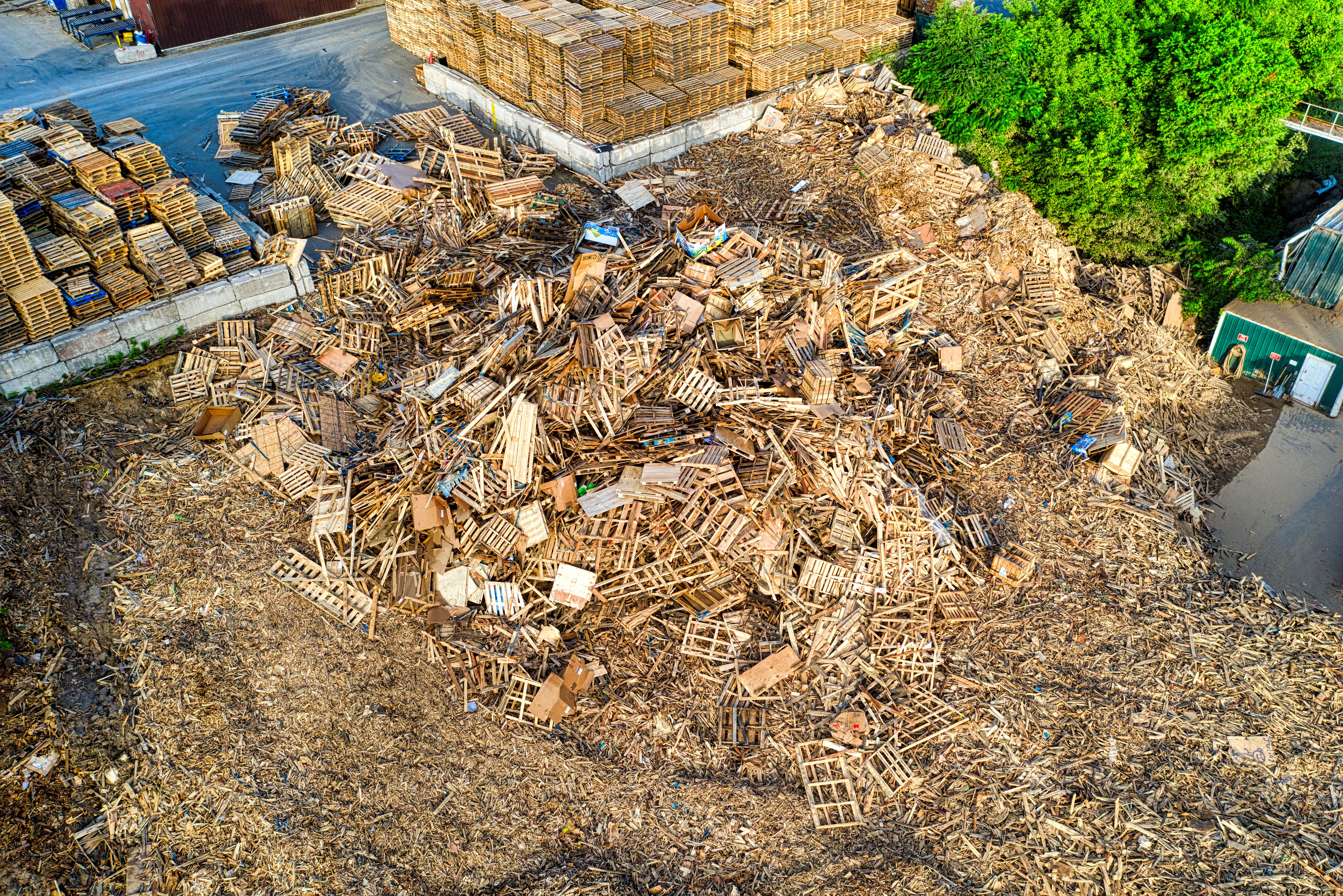
Every building job ends with a pile of wood nobody planned for. Offcuts from framing and joists, broken pallets from deliveries, sheet material trimmed to size, old timber stripped out during a renovation. On a small extension it fills a skip or two. On a larger project it can fill many.
Most of that wood is cleaner than people assume, and clean wood has a use. This post covers what usually ends up in the pile, why sorting it early matters, and where it can go instead of landfill.
What a typical job leaves behind
A contractor doing home extensions, loft conversions, garage conversions or a kitchen and bathroom refit will usually produce:
- Offcuts and trimmings from studs, joists, battens and rafters
- Pallets and crates that materials arrive on
- Sheet material such as plywood and OSB trimmings
- Stripped-out timber from old floors, partitions and roof structures
- Packaging, including timber bearers and crating
Some of this is clean, untreated wood. Some is painted, treated, glued or full of nails. The mix decides what you can do with it.
Sort it on site, not at the tip
Once clean timber goes into a general skip with plasterboard, brick and plastic, it is effectively contaminated. Separating it at the point where it is produced costs very little and keeps its value.
A simple routine is enough:
- Keep a dedicated bin or bay for clean, untreated timber.
- Put painted, treated, glued and metal-fixed wood in a separate pile.
- Pull nails and screws from the clean pile where you can.
- Keep both piles dry. Wet wood is harder to use for anything.
None of this needs equipment. It needs one person on site who knows the rule and a bay set aside for it.
What clean timber can become
Once it is sorted, wood waste has several outlets:
- Boiler fuel. Ground or chipped clean wood can feed a biomass boiler. Our biomass energy systems page explains what a boiler needs from its fuel.
- Mulch and bedding. Ground to the right size, clean wood is sold for landscaping and animal bedding.
- Reuse. Longer offcuts and good pallets often go straight to someone who can use them.
Size is what unlocks most of these. Bulky offcuts are awkward to store and haul, and a grinder turns them into an even product that you can move, sell or burn. See our waste reduction grinders page for how that works.
Why this matters to the person paying for the job
If you are having work done, waste is part of your bill. Skip hire, haulage and disposal charges all end up in the quote one way or another. A contractor who separates timber and finds a use for it can reduce those costs, and you will likely get a cleaner site while they work.
It is reasonable to ask a builder at the quoting stage how they handle waste. Good questions are:
- Do you separate timber from general waste?
- Where does the wood go once it leaves site?
- Is there a charge for removal, and does it change if the waste is sorted?
Asking your builder about waste
Extensions, loft conversions and kitchen refits all produce timber, so waste handling is worth raising before you sign anything. If you are in Milton Keynes or nearby, a Construction company in Milton Keynes & Surrounding Areas that takes on this kind of work will deal with it on every job, which makes it an easy question to ask.
Put it plainly at the quote stage. Do they separate clean timber from general waste? Where does it go when it leaves site? Does sorting change the price? A builder who has thought about it will have a quick answer, and getting it in writing means no surprise charges for skips later.
For contractors with a steady wood stream
A single job produces a skip of timber. A busy contractor or joinery shop produces a steady stream of it, month after month. At that volume the numbers start to favour handling it yourself: a grinder to cut hauling costs, and sometimes a small biomass boiler to heat a workshop or yard office.
If you have a regular supply of clean wood waste and want to know what would suit it, send us the details. Tell us the type of material, roughly how much you produce each week and what you do with it now, and we will say what we think fits.